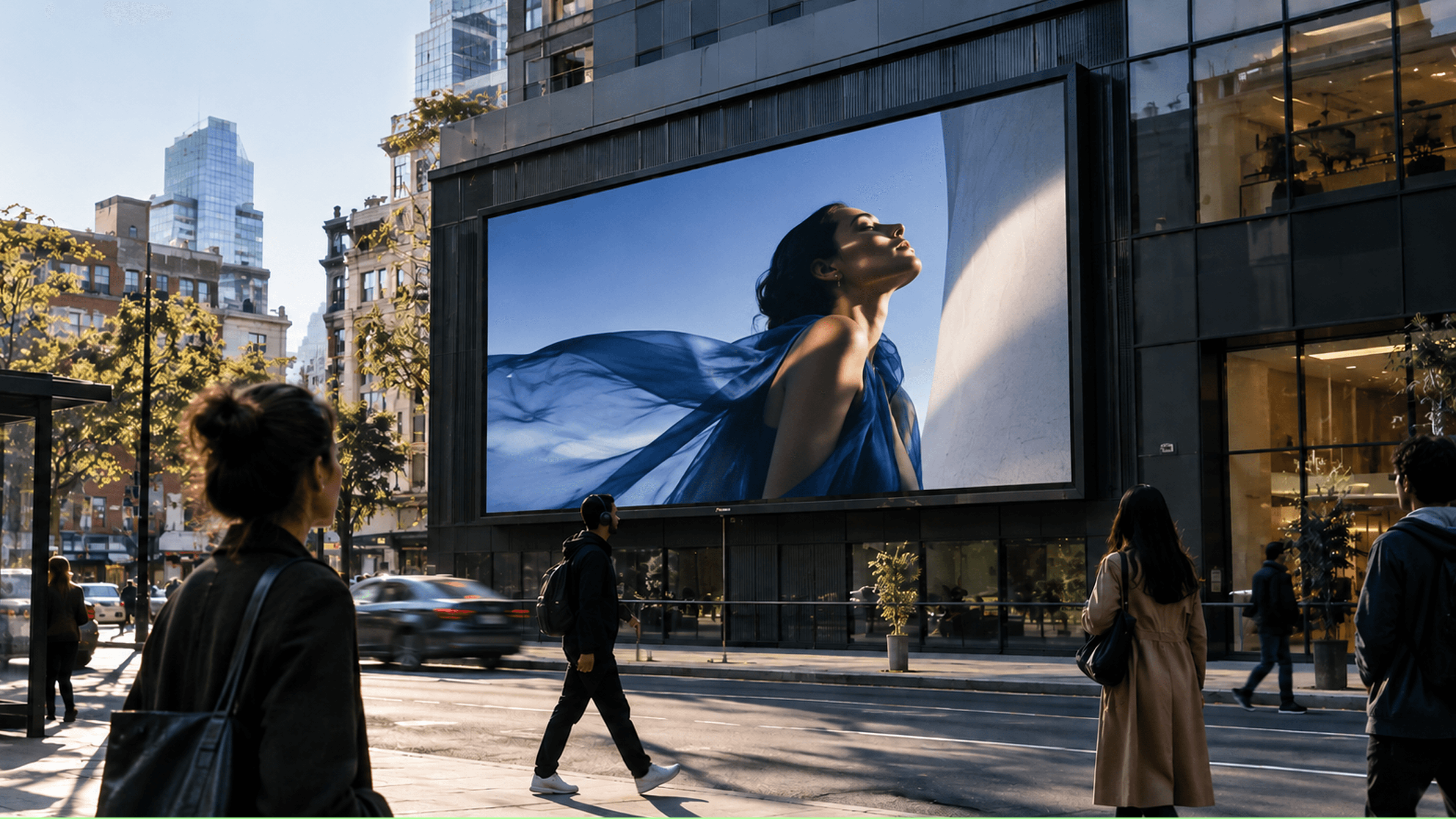
Oxford Street is changing. What does this mean for OOH?
Introduction
Date
Author
billups
Type

Oxford Street has entered a new chapter. With the first steps towards pedestrianisation beginning on 26 October 2026, one of London’s best-known shopping streets is changing how people move through it, and that raises important questions for Out-of-Home (OOH) advertising.
For advertisers, the change is about more than replacing vehicles with pedestrians. It could affect how audiences move, how long they spend in the area, and how they encounter advertising. But those changes shouldn’t automatically be treated as a win or a loss for OOH.
The real task is to understand what the new environment means for each location, the audiences it reaches, and the objectives a campaign needs to achieve.
What changes when the street changes?
Pedestrianisation can alter the rhythm of a place. Without the same flow of traffic, people may have more space to walk, stop, browse and spend time around shops and public spaces.
That could create different opportunities for advertisers. A person walking along the street may experience an OOH placement differently from someone passing it in a vehicle. The pace of movement, viewing angle, and surrounding activity can all influence how an advertisement is encountered.
The change also raises questions about existing audience estimates. Route figures suggest that around 5% of the impact on large-format sites and 10% on digital six-sheets comes from people travelling in vehicles rather than on foot, with variation by format and period.
Audience patterns can vary by location, time of day, day of the week and the reason people are visiting. Some placements may benefit from changing pedestrian flows; others may need to be reassessed if they have historically reached people travelling by vehicle.
The important point is not to assume that the audience will simply become larger or more engaged. It is to establish what is actually changing.

More time doesn’t automatically mean more engagement
Dwell time is often used to understand how long people spend in a location. It can be a useful consideration when planning OOH, particularly in places where people may pause, browse or gather.
However, time spent in an area is not the same as attention paid to an advertisement. Someone may spend longer on Oxford Street without noticing a particular placement. Equally, a person moving quickly through the area may still see and remember a well-positioned, relevant message.
As Martin Pittendreigh, Business Director at billups UK, explains:
“Dwell time is a valuable tool for advertisers; however, increased dwell time does not automatically equate to greater engagement.”
That distinction matters as Oxford Street changes. Longer visits may create opportunities for brands, but dwell time alone cannot tell advertisers whether a placement is reaching the right people or helping a campaign achieve its objectives.
The same applies to footfall. High audience volume can be valuable, but the number of people passing a site is only one part of the picture. Context, audience composition, visibility and campaign purpose all matter.

Rethinking the audience, not just the location
For advertisers, the next step is to look beyond the familiar characteristics of an established OOH location and consider how its role might change.
That means asking practical questions. Who is likely to use the street, and how might those movement patterns differ from before? Which placements are best positioned to reach those audiences? Could changes in pedestrian routes affect visibility or the way people encounter the creative?
It is also worth considering what the campaign needs the location to do. Is the priority broad awareness, repeated exposure, proximity to a retail destination, or a particular audience mindset? The answers will influence which placements make sense and how they should be evaluated.
A location that has worked well in the past may continue to deliver value, but its performance shouldn’t be taken for granted. Equally, a change in the surrounding environment does not automatically make a placement less effective. Both assumptions need evidence.

Measure what matters
As audience movement changes, measurement becomes especially important. Advertisers need to understand not only whether exposure patterns have shifted, but whether those changes matter to the campaign.
That starts with a clear objective. If the aim is awareness, the measurement approach should help assess whether the campaign is reaching its intended audience. If the goal is to influence consideration or behaviour, the evaluation should reflect that ambition and the evidence available.
Audience delivery, brand awareness, consideration, search activity and store visitation may all be relevant measures, depending on the campaign. No single metric will answer every question, and observed changes should be interpreted carefully rather than attributed automatically to one placement.
Martin’s view brings the planning challenge into focus:
“The opportunity isn't to assume that pedestrianisation makes advertising better. It's to understand what changes, measure what matters and adapt accordingly. Because the most valuable location isn't necessarily the one with the most footfall or the longest dwell time.”
It is a useful reminder that the value of an OOH site depends on more than the number of people who pass it or the time they spend nearby. What matters is how well the location supports the campaign’s intended outcome.
What this means for OOH planning
Oxford Street’s changing environment is a reason to revisit assumptions, not abandon them. Advertisers should review the audience and movement data available for relevant placements, consider how the new layout could affect exposure and assess whether existing plans still fit their objectives.
That may mean adjusting the mix of locations, reviewing the role of individual sites or updating the way campaign performance is measured. The right response will depend on the evidence and on what each brand needs its campaign to achieve.
For some advertisers, Oxford Street may remain an important part of the plan. For others, the changes may prompt a broader look at how different OOH placements work together to deliver reach, relevance and impact.
The key is to make those decisions deliberately, rather than treating pedestrianisation as a guarantee of better performance.

Turning change into a planning opportunity
Oxford Street’s transformation creates an opportunity to ask better questions about how people experience places and how OOH can reach them in those environments.
The opportunity isn't to assume pedestrianisation improves advertising. It is to understand what changes, measure what matters, and adapt accordingly.
For brands reviewing their OOH plans, billups can help explore what these changes could mean for audience strategy and media planning, using evidence to inform decisions rather than relying on assumptions.
Our news