Beyond personalization: Why shared experiences still matter
Introduction
Date
Author
billups
Type

Artificial intelligence has accelerated marketing's shift toward personalization.
Today's campaigns can be optimized in real time, audiences can be segmented with extraordinary precision, and messages can be adapted to individual behaviors and preferences almost instantly.
For marketers, it's an exciting moment.
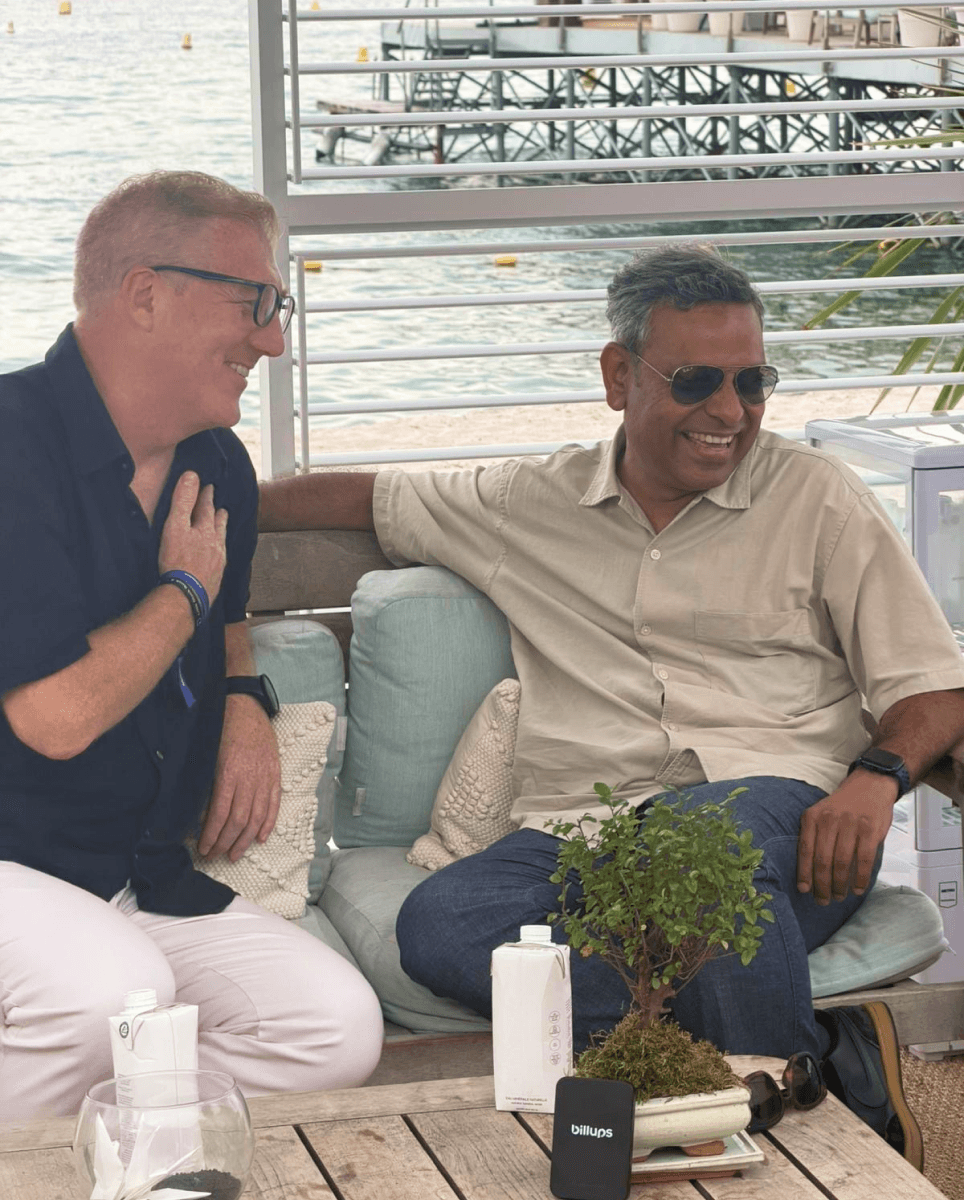
But during a conversation at the Cannes Lions Festival of Creativity, Benjamin Milne, CEO APAC, billups, and Ranganathan Somanathan, Chief Strategy Officer, billups, challenged the idea that personalization alone represents the future of advertising.
Instead, they explored a different question.
As every consumer begins to experience brands through an increasingly individual lens, what happens to the experiences we share?
Their conversation wasn't a rejection of AI or personalization. It was a reminder that while technology can make marketing more personal, it cannot replace the human need for familiarity, connection, and shared understanding.

Personalization doesn't replace familiarity
For years, marketers have pursued increasingly sophisticated forms of audience targeting.
The assumption has always been simple: the more relevant a message becomes, the more effective it will be.
Yet, as Ranga explained, relevance alone isn't enough.
Brands still need to build awareness, familiarity, affinity, and trust before personalization can truly resonate.
"Directly going to personalization without necessarily building familiarity is creepy."
Technology can tell brands more about consumers than ever before. But information doesn't automatically create trust.
People don't build relationships with brands because an algorithm knows what they searched for yesterday. Relationships develop through recognition, repeated exposure, and familiarity.
Personalization can deepen those relationships. It cannot create them from scratch.

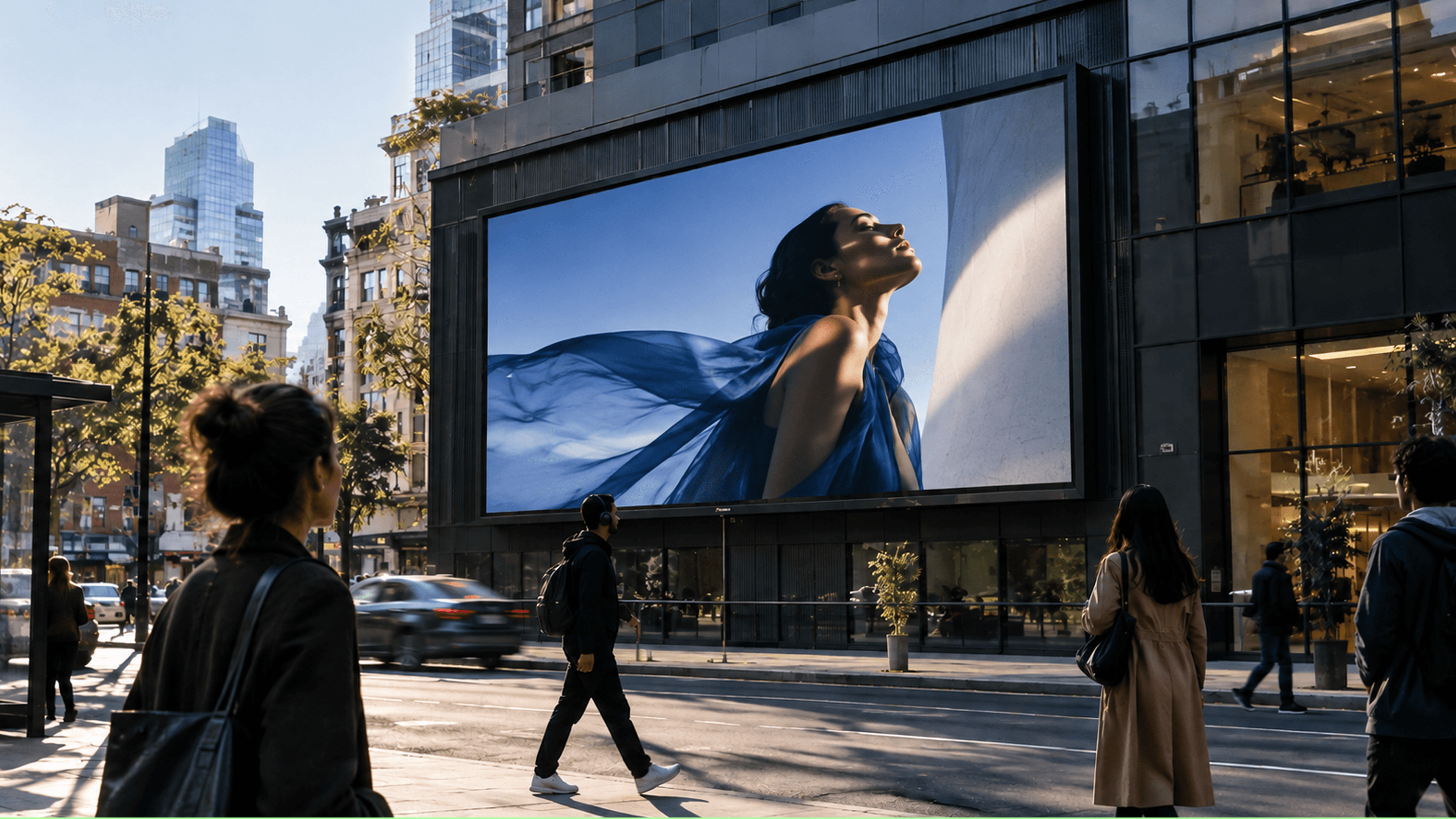
OOH creates the shared experiences personalization cannot
If familiarity remains essential, where does it come from?
According to Ben, public spaces continue to play a unique role.
OOH advertising has always operated differently from most digital channels. Rather than creating thousands of individualized experiences, it creates moments that people encounter together.
"From a brand perspective, the value in that is social currency. It's the place where we can all have a shared experience and understand authentically what a brand stands for."
That's becoming increasingly important.
Consumers no longer move through the same media environments. Their feeds are personalized. Their search results are customized. Their content recommendations are unique.
OOH remains one of the few channels capable of creating a common reference point.
A brand message displayed in a public space isn't experienced in isolation. It becomes part of the physical environment and, potentially, part of a collective experience.
And that collective experience can help brands build something personalization alone cannot: cultural relevance.

Context may be OOH's greatest strength
The conversation also highlighted another important distinction: the difference between personalization and context. They're often treated as interchangeable.
They're not.
Personalization says, "This message is for you."
Context says, "This message belongs here, right now."
This has always been one of OOH's greatest strengths.
A message that responds to weather conditions, reflects a local event, or acknowledges a particular moment doesn't need extensive personal data to feel relevant.
It simply needs to understand the environment.
Location.
Time.
Culture.
Context.
These factors have always shaped successful OOH campaigns. As AI continues to transform digital media, those contextual advantages may become even more valuable.
The future is both personal and shared
Perhaps that's the real lesson from Cannes. The future of marketing isn't a choice between personalization and OOH.
It's about understanding the role each plays.
AI will continue to make advertising more personal. But public spaces will continue to provide something increasingly difficult to create elsewhere: a shared understanding of what a brand represents.
As Ben puts it:
"In a world where we're headed towards hyper-personalization and a unique lens for each individual onto a brand, the public spaces become the place where the brand truth can be spoken, and where we can all find our shared understanding."
Algorithms may become remarkably good at understanding individuals.
But people remain social.
They still respond to experiences they encounter together. They still remember the brands that become part of those moments.
And that's why OOH may become even more valuable in an age defined by personalization.
Because algorithms can personalize attention.
Only shared experiences create collective memory.
Listen to the full conversation
Hear the full conversation with Ben Milne and Ranganathan Somanathan on dentsu's The Big Q, recorded live at the Cannes Lions Festival of Creativity.
Our news