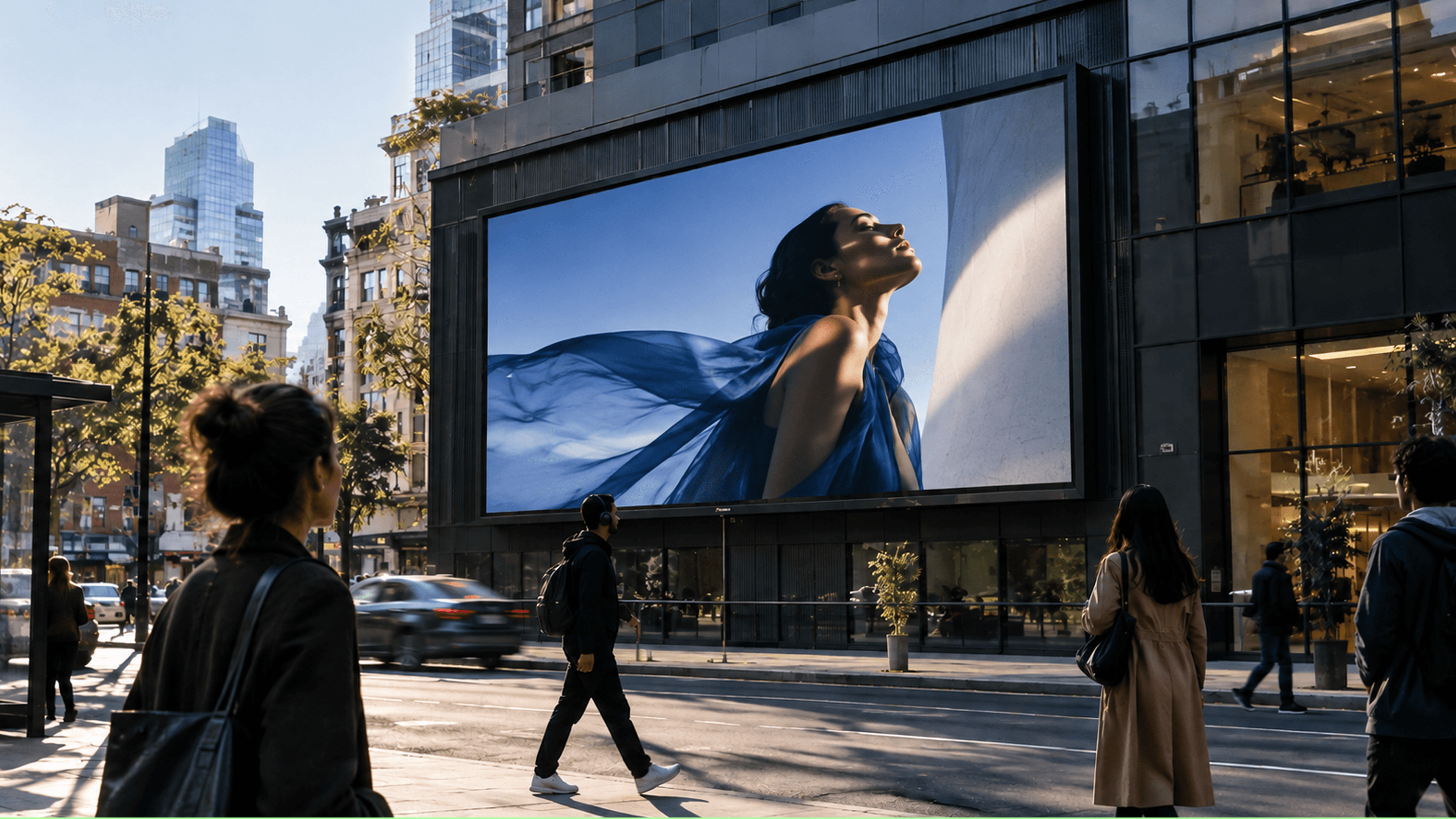
The impression you can't click
Introduction
Date
Author
billups
Type

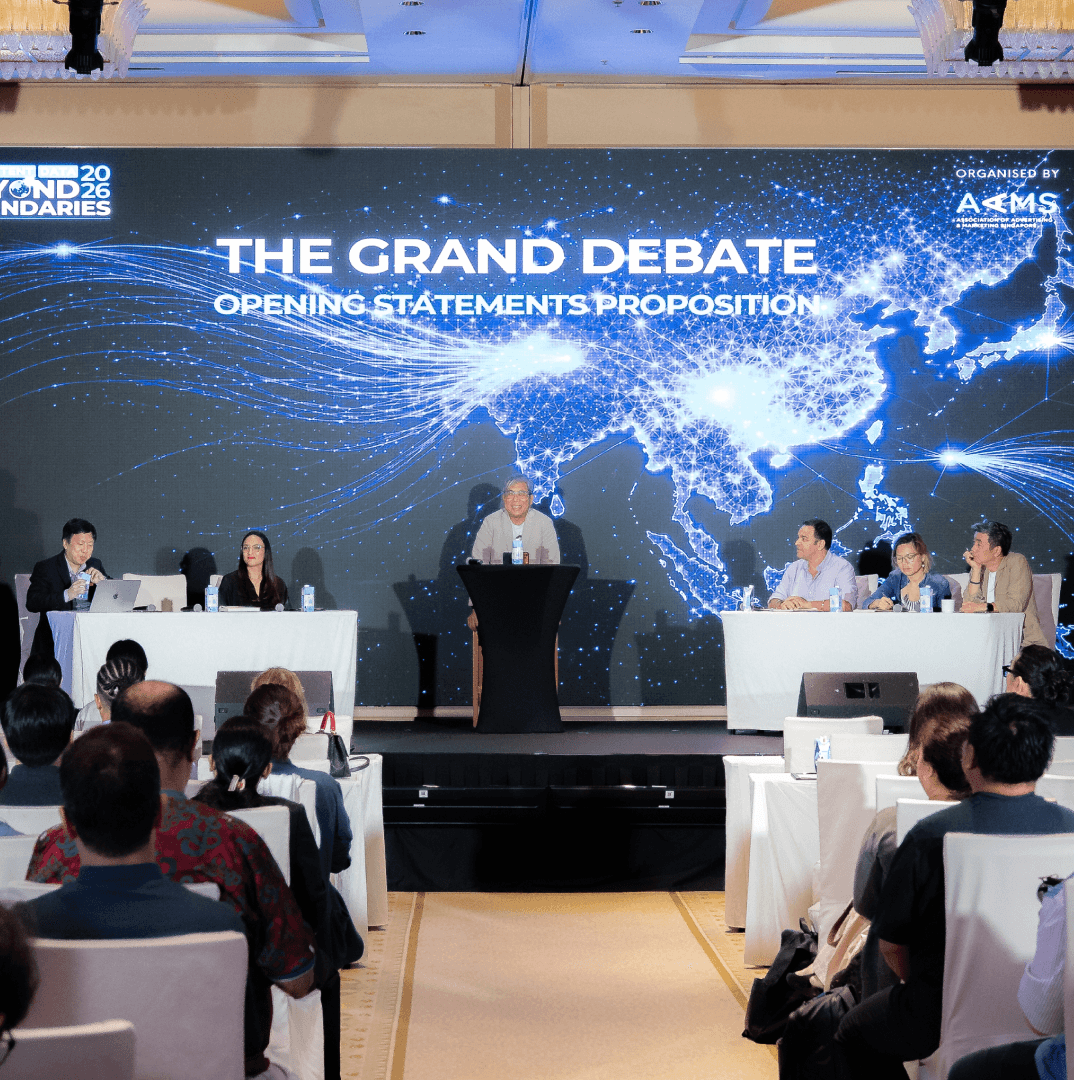
Something interesting happened at Beyond Boundaries. Two conversations took place that, on the surface, had almost nothing in common.
One was about billboards. The other was about artificial intelligence.
One challenged the idea that digital had disrupted Out-of-Home advertising. The other explored what happens when AI starts doing work once reserved for people.
Neither conversation was really about technology. Not in the end.
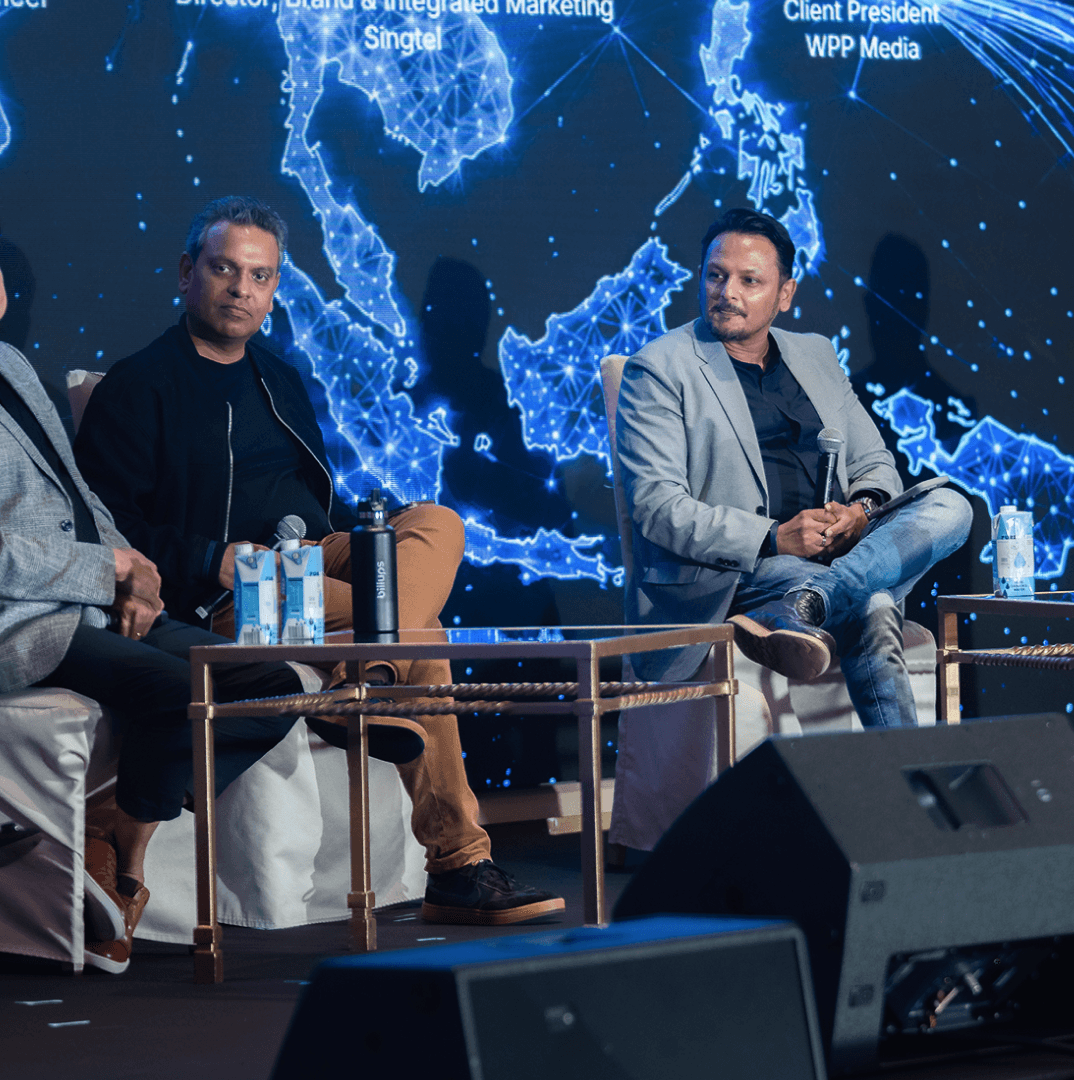
Ranganathan Somanathan, Chief Strategy Officer at billups, offered a simple reframing:
“Every other legacy medium got disrupted by digital. OOH got upgraded by it.”
For years, digital has been treated as the inevitable winner in advertising because it can be measured: the click, the conversion, the scan, the purchase.
But what if digital didn't make OOH less relevant? What if it made a physical medium smarter?
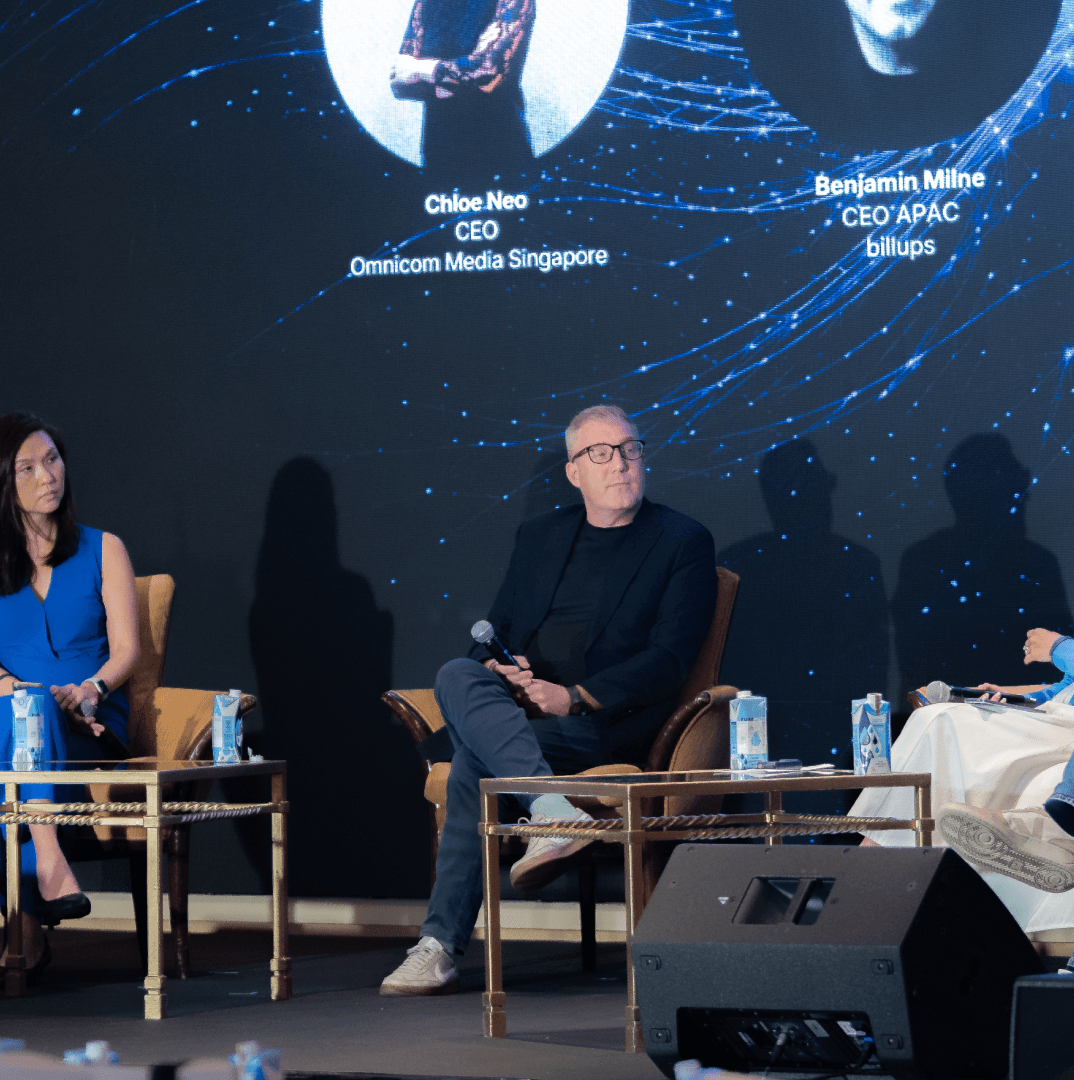
Benjamin Milne, APAC CEO at billups, approached a similar question from a different direction. If AI can take on more of the work people have traditionally owned, what happens to the human expertise behind it?
Two conversations. Two technologies. One bigger question: As technology gets better at measuring, automating and optimizing, what becomes more valuable about the things it can't replace?
OOH didn't get disrupted. It got upgraded.
Ranga's argument isn't that digital never changed OOH. It did.
Screens can be digital. Creative can change in real time. Buying can be automated. Measurement is becoming more sophisticated.
But the experience remains physical.
People encounter OOH while moving through cities, waiting for transportation or walking through an airport. Technology has made the medium more flexible without taking it out of the real world.
The numbers show how far that upgrade has come. Global OOH advertising spend reached $54.2 billion in 2025, with DOOH nearing 50% of total OOH investment. In APAC, DOOH accounted for 55.7% of OOH revenue. Programmatic OOH reached $2.1 billion in 2025 and is projected to reach $12.9 billion by 2030. In APAC, programmatic represents about 32% of DOOH revenue.
Weather, traffic, audience signals, and cultural moments can now influence what appears on a screen and when.
The technology is getting smarter. The medium is still right there in front of you.
The attention problem is really a trust problem
That physical presence matters because advertising has another problem to solve: trust.
The industry has become very good at measuring what happens next. But attention isn't necessarily the same thing as belief.
OOH starts from a different place. A billboard can't generate bot traffic. A transit shelter can't be hidden behind an ad blocker. An airport screen can't disappear beneath another browser tab.
The environment itself is part of the medium.
Ranga's second point was even more direct:
“You can't fraud a billboard.”
It's blunt. That's also why it works.
OOH isn't a replacement for every digital channel. It offers something different: an impression that exists publicly and physically, in the real world.
AI changes the work. It doesn't eliminate the people.
Ben Milne approached AI from a different direction. He wasn't asking whether AI can do more. That's becoming obvious.
At billups, that thinking is taking shape through audrai™, the first agentic AI system made for OOH, designed to handle analytical work involved in planning, audience recommendations, market analysis and inventory selection.
But Ben's argument goes beyond automation.
“We didn't upskill around AI: we redesigned what good work looks like.”
When AI takes on more of the analytical heavy lifting, the planner's role can move toward work that still requires judgment: interpreting markets, understanding nuance, working with clients and deciding what the information actually means.
That shift isn't simply a technology decision. It's about trust and professional identity. Experienced planners have spent years building expertise around work AI can now perform. The question isn't only whether the technology works. It's whether people will actually use it.
Ben's answer is to put the machine and the human to work where each is strongest:
“Use AI for speed and scale; rely on humans for judgment, empathy and emotional intelligence.”
The machine handles scale. The person handles meaning.
The impression that matters
Go back to the person who walked past the ad.
No click. No scan. No conversion.
As far as the dashboard is concerned, nothing happened.
But maybe the ad was remembered. Maybe the brand came to mind three days later, when a decision had to be made.
There may be no clean attribution path connecting those two moments. But that doesn't make the impression less valuable.
Ranga and Ben approach the issue from different places, but the lesson is similar: Technology can make media smarter and work faster, but it doesn't make human judgment, context, emotion or memory obsolete.
It makes them more valuable.
Because the future of marketing won't be defined only by what technology can measure or automate.
It will also be defined by what people remember.
And sometimes, the impression that matters most is the one you can't click.
Our news