Navigating Election Season: What Every Advertiser Should Know About OOH Planning
Introduction
Date
Author
billups
Type
Articles

Every election cycle brings a surge of political advertising that changes how brands compete for premium Out-of-Home (OOH) inventory. As demand increases, advertisers across every category begin competing for the same limited space, making early planning more important than ever.
That competition is only expected to intensify. According to AdImpact, the 2026 U.S. election cycle is projected to generate a record $11.6 billion in political advertising, surpassing both the 2022 midterm cycle and the 2024 presidential election if the forecast holds. As political spending continues to grow, advertisers should expect greater competition for premium inventory, increased pricing pressure, and reduced flexibility in many markets.
The growing role of OOH in political media strategies reinforces that trend. According to the Out of Home Advertising Association of America (OAAA), political OOH investment has steadily increased over the past decade, reaching record levels in recent election cycles as campaigns continue expanding their use of the medium.
Understanding how election cycles influence the OOH landscape and planning accordingly can help brands secure the right inventory, maintain campaign quality, and avoid unnecessary disruption.
Election spending is growing, and so is the competition for OOH
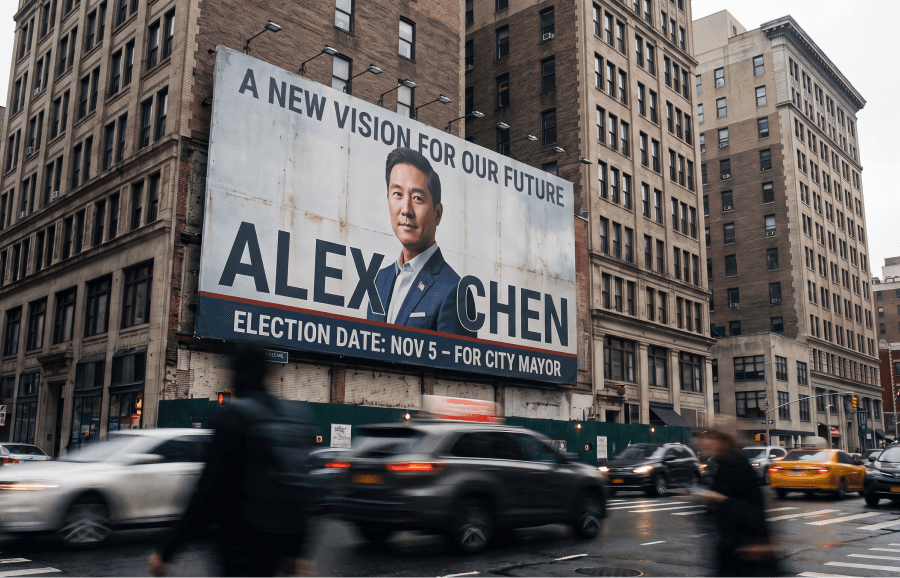
Political campaigns enter the market with significant advertising budgets, competing aggressively for high-visibility OOH placements. Premium digital and static inventory that may normally remain available for months can become increasingly difficult to secure as election activity accelerates.
That acceleration tends to happen quickly. OAAA reports that nearly two-thirds of political OOH spending occurs during the second half of even-year elections, with nearly half taking place in the fourth quarter alone. As campaigns ramp up, premium inventory can disappear far more quickly than many advertisers expect.
However, the impact isn't distributed evenly across the country. In 2024, Pennsylvania became the first state to surpass $1.2 billion in political advertising, illustrating how quickly inventory can tighten in competitive election markets. Even advertisers outside those markets can feel the effects as demand extends into neighboring regions and brands begin looking for alternative placements.
As inventory tightens, advertisers lose flexibility
When premium inventory becomes scarce, campaign planning becomes more challenging.
Advertisers planning closer to launch often face fewer location options, less scheduling flexibility, and more difficult tradeoffs between reach, budget, and timing. Campaigns that appeared readily available early in the planning process become significantly more constrained as election activity accelerates.
Brands that begin planning earlier generally have more flexibility to evaluate inventory, compare placement options, and build stronger media plans before competition intensifies.
Greater demand can create pricing pressure
As competition for inventory increases, media owners may command higher rates for sought-after placements. While pricing varies by market and inventory type, record political advertising investment has consistently increased demand across multiple media channels, creating one of the most competitive advertising environments advertisers have faced in recent election cycles.
Securing inventory earlier can help advertisers improve pricing certainty, preserve budget flexibility, and avoid unnecessary last-minute adjustments.
Competitive election markets often feel the greatest pressure
Inventory shortages are typically most pronounced in competitive election markets and closely contested congressional districts, where political campaigns concentrate a significant share of their advertising budgets.
And those markets extend beyond presidential races. OAAA reports that nearly 90% of political OOH spending over the past decade has come from state and local races, including gubernatorial contests, legislative campaigns, and ballot initiatives. As a result, advertisers may experience heightened competition in markets driven by local elections, even when they aren't considered major national battlegrounds.
AdImpact projects the 2026 election cycle will once again generate record political advertising investment, suggesting continued pressure on premium inventory across Senate, gubernatorial, and congressional races. As inventory tightens in these markets, surrounding areas often experience increased demand as advertisers seek comparable alternatives.
Brand context matters just as much as placement
Election season doesn't only affect inventory availability; it can also influence the environment in which campaigns appear.
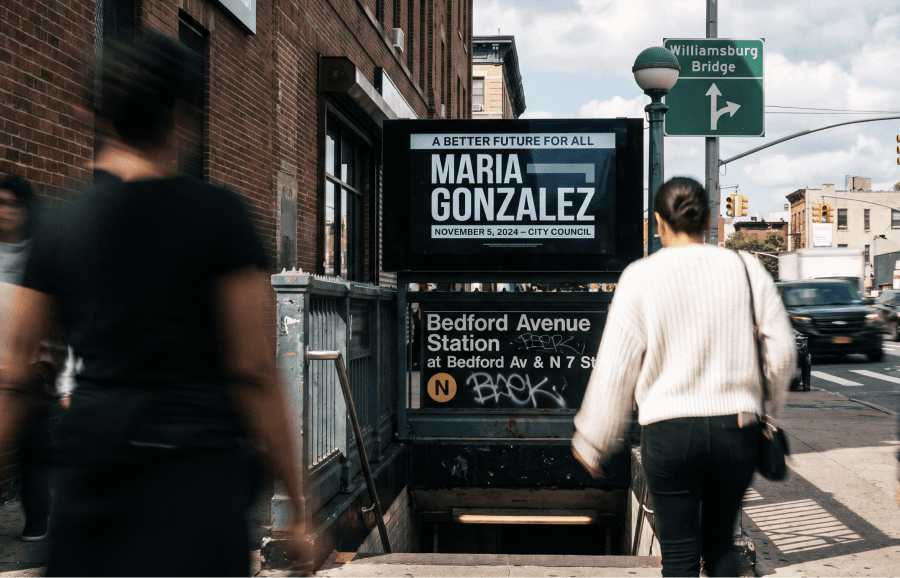
As political advertising becomes more prevalent, commercial advertisers may find their messaging appearing within line-of-sight of highly partisan or attack-focused creative. That visibility is difficult to ignore. According to OAAA, more than six in ten adults encountered political advertising during the 2024 election cycle, with some markets exceeding 80% exposure. As political messaging becomes increasingly prominent, advertisers should consider not only where their campaigns appear, but also the surrounding messaging that may influence brand perception. While placement policies vary by media owner, adjacency remains an important consideration for brands evaluating campaign environments.
Reviewing placements early gives advertisers more opportunities to identify suitable alternatives while preserving campaign objectives and brand context.
How advertisers can stay ahead
Election-year challenges aren't impossible to navigate, but they do reward advertisers who plan proactively.
Plan earlier than you normally would
Don't wait until the traditional 45–60-day planning window.
Every election cycle follows a familiar pattern: advertisers assume there's still time to finalize media plans, only to discover premium inventory has disappeared faster than expected. Starting earlier provides greater flexibility, stronger inventory options, and more time to adapt as market conditions change.
Secure long-term bookings where possible
Locking in premium locations and current market rates before political demand peaks can improve inventory certainty while reducing exposure to market fluctuations.
Exercise existing renewal opportunities
If your brand regularly utilizes recurring inventory, exercising renewal options early can help preserve valuable placements before additional demand enters the marketplace.
Evaluate pre-emptible inventory carefully
Pre-emptible inventory can offer flexibility, but increased political demand may also increase the likelihood of displacement. Understanding those tradeoffs early helps build more resilient media plans.
Review placement adjacency
As political advertising increases, reviewing nearby messaging becomes just as important as evaluating the placement itself. Assessing campaign environments before launch provides greater opportunity to identify suitable alternatives if needed.
Why early planning creates better outcomes
Election years don't create entirely new advertising challenges - they simply magnify existing ones. Because political advertising activity is heavily concentrated later in the election cycle, waiting until the final months to secure inventory often means competing in the market's busiest period. Planning early gives advertisers greater flexibility before demand reaches its peak as more advertisers compete for the same premium locations, inventory moves faster, and waiting too long often limits both flexibility and negotiating power.
Brands that begin planning early are better positioned to:
Secure premium inventory before demand peaks
Improve pricing certainty where possible
Maintain greater flexibility across key markets
Reduce the risk of campaign displacement
Preserve campaign quality and brand context throughout the election cycle
Stay ahead of changing market conditions
Election seasons can reshape inventory availability, pricing, and campaign planning almost overnight.
At billups, we've seen how early planning gives advertisers more than just access to inventory; it gives them the time and flexibility to make smarter decisions before market conditions become more competitive.
With market intelligence, strategic planning, and proactive inventory management, billups helps advertisers stay focused on reaching the right audiences even as the marketplace evolves.
Our news


